
Family unity is disappearing
Can our real estate choices have an impact on family unity?
FAMILYREAL ESTATE
Kobus Taljaard
2/3/20266 min read
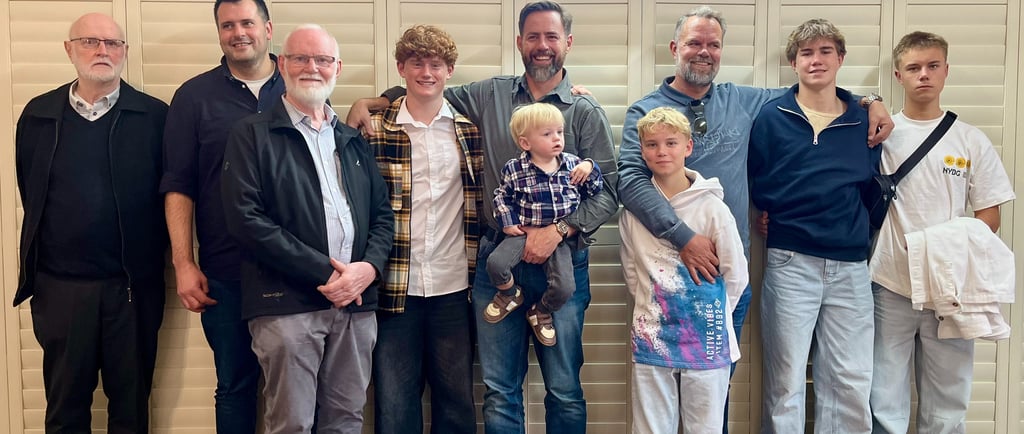
The Cost of Independence: Why We're Losing Our Families
I was raised to be independent. It was drilled into me that success meant standing on your own two feet, making your own way, proving yourself without leaning on anyone. My parents believed they were preparing me for the world. And I believed them.
So I did my own thing. I went my own way. I built a life separate from theirs, separate from my siblings. And now, decades later, my parents, my siblings, and I all live far apart. We cannot be part of each other's daily lives. We miss the ordinary moments—the shared meals, the casual conversations, the presence that binds families together.
And I realize now: my parents were teaching me something the world valued. But it wasn't something our families needed.
The World Whispers a Seductive Lie
We live in a culture that idolizes individuality. It sounds almost heretical to question it. But the message is everywhere: your success is your own. Your dreams are yours alone. Your family is optional—check that box, but don't let them hold you back.
I see it in the contemporary voices we follow. Influencers and entrepreneurs who tell young people to cut ties with families who "drag them down." Not explicitly—they're gentler than that. They say, "minimize your time with them. Build your empire. You can check in later." It sounds reasonable. Mature, even.
But there's a word for this: self-idolizing. And it's destroying us.
The culture tells us that people who "made it on their own, despite their families" are the real winners. We celebrate the self-made person. We rarely celebrate the person who stayed close to home, who built their life alongside their parents and siblings, who made decisions in consultation with the people they love most.
We're missing something critical. Something ancient. Something that our ancestors knew but we've forgotten.
What Happens When We Choose Ourselves
Let me tell you what happens. You build a life of independence, and it feels like freedom. For a while.
Then you realize you're alone in it.
I followed this path. I chose my own way, separate from my family. And that choice—made with the best intentions, with a cultural script I didn't even know I was following—led to the quick destruction of my own family unit. My marriage ended. My son experienced fracture. And I spent over a decade trying to repair relationships that distance and independence had broken.
Geography matters. I know that sounds quaint in a world where we can video call anyone, where technology supposedly erases distance. But geography matters because presence matters. You cannot babysit a grandchild through FaceTime. You cannot fix a tire for your sibling on Zoom. You cannot celebrate a victory with the same intimacy when you're separated by states and years of infrequent visits.
More than that: when you live far apart, you miss the daily opportunities to serve each other. And service is where love becomes real.
What the Data Knows (But We've Forgotten)
There's something interesting in the research. Malcolm Gladwell documented a community of Italian immigrants in Pennsylvania—people who lived through poverty and harsh conditions that should have broken them. Yet they had the lowest rate of heart disease of any group in America at the time.
Why? They stayed together. Geographically close. Eating together. Caring for each other. Living in interdependence rather than independence.
We have data telling us what Scripture has always told us: that we are not meant to be alone. That humans thrive in proximity. That family bonds—real, daily, lived-out family bonds—are one of the greatest protections against despair, loneliness, and disease.
Yet we keep choosing distance. We keep celebrating the person who left home and never looked back.
The Beauty of Interdependence
There's a beauty in family business that you don't find in individual enterprises. Why? Because when you're building something alongside your family, you can't hide. You can't pursue profit at the expense of your brother. You can't climb over your sister. You're forced—gloriously forced—to live out your ambitions in favor of those you love.
That constraint isn't a limitation. It's a gift.
When families live close together, children grow up understanding something essential: they're part of something larger than themselves. A child with their own room in a sprawling suburban home might feel independent. But a child who shares space with siblings, who plays in a garden with cousins, who eats at a table with grandparents—that child is learning what it means to belong.
I'm not romanticizing small homes or tight quarters. I'm saying that when we prioritize space and status over connection, we're making a choice. And that choice has consequences.
The house you buy matters. Not because of its investment potential or how it looks to the neighbors, but because of what it teaches your children about what's valuable. Is it privacy? Or is it presence? Is it independence? Or is it love?
The Responsibility That Heals
Real family unity isn't sentimental. It's not about feeling close. It's about choosing to serve one another. Consciously. Deliberately. Again and again.
It means respecting upwards—children honoring parents and grandparents. It means acting with responsibility downwards—teenagers caring for younger siblings, parents nurturing their children, grandparents delighting in their grandchildren's growth.
It means aunts and uncles stepping in. Cousins learning from cousins. Nephews and nieces understanding that they're held by a web of people who are committed to their wellbeing.
This kind of structure—this hierarchy of care and respect—creates something we've lost: self-aware adults. Responsible people. Humans who understand that their actions affect others, that their choices ripple outward, that they're accountable not just to themselves but to the people they love.
When you live this way, you can't be selfish in secret. Your mother sees your struggle. Your brother knows when you're hurting. Your sister calls you out when you're heading in the wrong direction. And you do the same for them.
This isn't control. It's care. And it's transformative.
What I Wish I'd Known
If I could go back to that young man who was taught to be independent, who believed the world's story about success, I would tell him this:
Your family isn't an obstacle to overcome. They're the point. The real wealth isn't in what you build alone—it's in what you build with them. The real success isn't in how far you go from home—it's in how deeply you stay connected to the people who know you best.
I would tell him that the decade of repair work, the humility required to rebuild fractured relationships, the conscious choice to move closer to family even when it felt like stepping backward—that all of it would be worth it. That his children would be healed by the presence of grandparents. That his parents would find purpose in helping raise the next generation. That he would discover a kind of joy that independence could never offer.
To the people reading this: you still have time. You can make different choices than I did.
An Invitation
If you're young, gear up. Understand that building family unity in a culture that celebrates independence is swimming upstream. It will be hard. But it's worth it. Forever.
If you're in the middle of life, consider moving closer. Not away. Closer. Get a house within walking distance of your parents. Close enough that your children can go get tea with their grandmother. Close enough that your father's jokes and your mother's wisdom are woven into the daily fabric of your kids' lives.
If you're older, open your home. Let your children and grandchildren know that you're not a burden to be managed, but a resource to be drawn upon. You have decades of accumulated love to give.
And if you're hurting—if distance and independence have already fractured your family the way they fractured mine—know this: it's not too late. Healing is possible. It takes humility. It takes time. But it's possible.
Reach Out
This isn't just business for me. It's about how we live. If you want to talk about real estate decisions that support family unity, or if you just want to share your own story, I'm here. I'm real. I'm imperfect. And I'm committed to serving people in any capacity I can.
You can reach me:
Email: kobus@webuybigskyhomes.com
Phone: 706-708-0732
Facebook: https://www.facebook.com/KobusTaljaard10778
Or simply reply to this post. I read every message.
The world will keep whispering that independence is freedom. The biggest family lie: "Home is where the heart is". Nonsense!! People follow their whimsical hearts... that is not home! That is, in fact, destruction. I've learned the truth: interdependence is home. And home is what we're all really looking for. Home is where true love exist and always have.
To our families,
Kobus
Get in touch


© 2025 KT Ventures LLC DBA "We Buy Big Sky Homes". All rights reserved.
Real Estate Investor | Cash Buyers | Serving Big Sky Country | Montana, USA
Areas We Buy Montana Houses
Anaconda ● Belgrade ● Billings ● Bozeman ● Butte ● Columbia Falls ● Great Falls ● Hamilton ● Havre ● Helena ● Kalispell ● Laurel ● Lewistown ● Livingston ● Miles City ● Missoula ● Polson ● Sidney ● Whitefish